Bridal Jewellery Delhi: Budget, Sets and Timeline
Sun Sea Jewellers, Karol Bagh, New Delhi · 20 October 2026
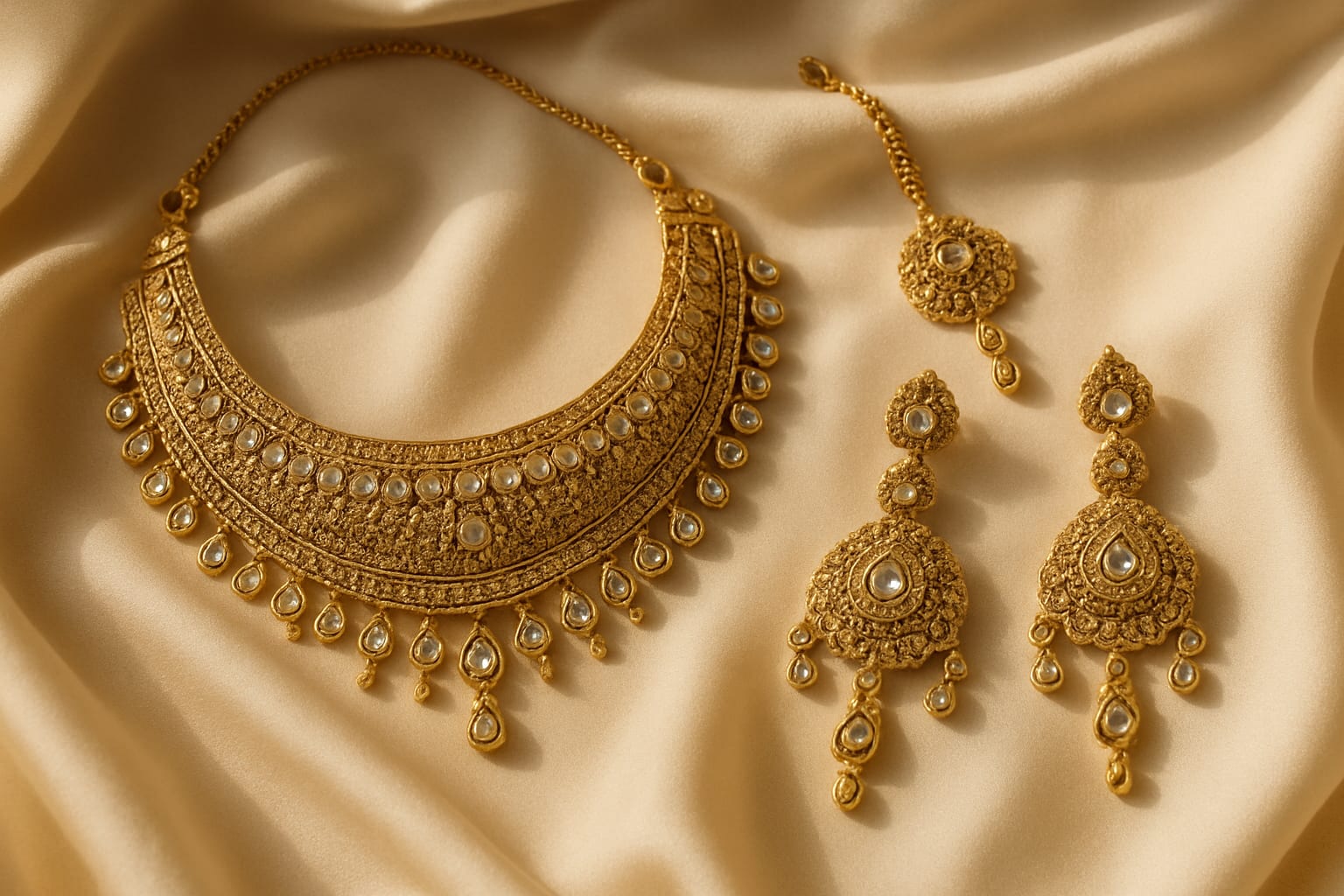
If you are searching for bridal jewellery in Delhi, you have probably already noticed how overwhelming it gets. There are necklaces, tikkas, naths, bangles and rings to think about, several traditions of craftsmanship, family opinions, and a wedding date that does not move. We are a family jeweller in Karol Bagh, in business since 1984, and over the years we have seen what makes bridal shopping calm and what makes it stressful. This guide is the planning framework we would give any family before the first showroom visit.
Start with the outfits and the ceremonies, not the jewellery
The most common mistake is choosing jewellery first and fitting the outfit around it. Do it the other way round. Jewellery has to work with the neckline, the dupatta, the hairstyle and the colour of each outfit, so the lehenga or saree decisions come first, even if only as a shortlist.
Then list the events: roka, mehendi, sangeet, haldi, the wedding and a reception. Not every event needs a new, heavy set. Many brides wear one statement set at the wedding and a lighter one at the reception, so writing the list down shows how many pieces you actually need.
Deciding what to buy
A traditional bridal set is built from a handful of pieces. It helps to rank them by how much they matter to you, because that decides where the money goes.
- Necklace set: usually the centrepiece of the look, often a heavier necklace with matching earrings. Decide whether you want one grand necklace or a layered combination.
- Maang tikka and matha patti: frames the face and is highly visible in photographs, so worth designing to match the necklace.
- Nath: a personal and often regional choice. Some brides skip it entirely, which is perfectly fine.
- Bangles and kadas: these are worn all day and get the most wear, so comfort and sturdy construction matter as much as looks.
- Earrings: size and weight matter, especially if you are wearing a heavy tikka or hair accessories.
- Rings and smaller pieces: often the most reusable items after the wedding.
How to split the budget between gold, Polki, Kundan and diamonds
We will not quote a number here, because the right figure depends entirely on your family, and a rough range printed in a blog post helps nobody. What we can help with is how to think about the split.
Start with a total you are comfortable with, then divide it by purpose. Plain gold carries its value mainly in weight and purity, so it is the most predictable part of any bridal budget. Polki, Kundan and Jadau pieces add craftsmanship and stonework on top of the gold, so a larger share of what you pay goes to making and finishing. Diamond pieces add stone value, which depends on carat, shape and quality. Our guide to Polki, Kundan and Jadau explains how these styles differ in look and in what you are paying for.
Whatever the mix, ask for a written breakup for every piece. At Sun Sea we sell complete finished jewellery, and every price is broken down into gold weight and purity, gold value, diamond value with carat and shape, side diamonds if any, making charges, and a flat 3% GST on the whole total. Seeing the same breakup across all your options is the easiest way to compare them honestly.
A month-by-month timeline
Made-to-order bridal jewellery takes time. Design discussion, sampling, approval and finishing all happen in sequence, and rushing any of them shows in the result. We do not want to promise exact weeks, because it depends on the complexity of the design, so the safest advice is to plan several months ahead. Here is a timeline that works well.
- About six months out: Fix the wedding date and rough budget, shortlist outfits, and list the events. Browse styles online and save photographs of pieces you like.
- Five to four months out: Visit the showroom for a first consultation. Discuss the sets, look at existing designs, and decide which pieces will be custom and which can be chosen from what is available.
- Four to three months out: Finalise designs and approve the breakup. This is when custom pieces go into making, so take your time to get family agreement first.
- Three to two months out: Pieces are being made. Use this time to finish the outfit fittings so you can check the jewellery against the actual fabric.
- Two months to one month out: Review finished pieces in person, try them with the outfit, and request any adjustments such as length or clasp changes.
- Final weeks: Collect the jewellery, check invoices and hallmark details, and arrange safe storage at home before the events begin.
How the bespoke process works
If you want something designed around your wedding, our bridal jewellery page explains the consultation. In short, you share your outfit ideas, references and budget, we discuss designs and materials with you and your family, and we agree on the details before making begins. You see the breakup before you commit, and you can ask questions at every stage.
What to bring to your consultation
- Photographs or swatches of your outfits, even if they are not final yet
- Reference images of jewellery you like, and a few you definitely do not
- Any family jewellery you want to match or build around
- Your wedding date and the list of events
- A rough budget, and who in the family will be involved in decisions
- Your usual comfort preferences: how heavy you like jewellery, any allergies, and whether you wear it for long hours
If you are planning from overseas, our guide for NRI brides and families covers how to organise a shorter trip, and the milni jewellery guide helps with gifting for the ceremony itself.
Hallmarking and invoices
Bridal jewellery is a large purchase, so paperwork matters. Gold jewellery with a BIS hallmark carries the BIS mark, the purity in carat or fineness, and a 6-character alphanumeric HUID. You can check a HUID through the BIS Care app. Rules and exceptions can change, so check the current requirements, and see our guide to hallmarking and HUID in Delhi for the basics.
Keep the itemised invoice for every piece. It records the gold weight and purity, the stone details and the GST, which is useful for insurance and for your own records. For stone-set pieces, ask which stones are natural and which are not, and check whether a certificate applies.
Involving the family without losing your own taste
Agree the budget and the must-have pieces at home first, so the showroom visit is about choosing designs and not debating the total. Bring the two or three people whose opinions matter most, and note down what was decided.
Visiting us in Karol Bagh
We are at 2659 Gurudwara Rd, Block 46, Beadonpura, Karol Bagh, New Delhi 110005, and we are open Tuesday to Sunday, 11:30 am to 7:30 pm. We are closed on Mondays. Karol Bagh Metro station on the Blue Line is the nearest metro, and there is free street parking as well as on-site parking, according to our Google listing. We accept credit and debit cards and Google Pay. Call +91 88608 66000 before you come, especially on weekends. If you are comparing the neighbourhood's options, our Karol Bagh jewellery market guide and visit page have directions and tips.
Quick FAQ
How early should I start shopping for bridal jewellery in Delhi?
We suggest planning several months ahead, around six months where possible, especially if you want custom pieces. Ready designs can be chosen faster, but a custom set needs time for design, approval and finishing.
Do I have to buy a full bridal set?
No. Many brides choose one statement necklace set and a few supporting pieces, and reuse family jewellery for the rest. We would rather you buy what you will actually wear.
Can I see the price breakup before I decide?
Yes. Every price at Sun Sea breaks down into gold weight and purity, gold value, diamond value, side diamonds if any, making charges and a flat 3% GST on the total.
Can I combine gold, Polki and diamond pieces in one look?
Yes, and many families do. The key is to choose one or two showpieces and keep the others simpler, so the pieces complement each other instead of competing.