Buying a Solitaire Ring in Delhi: A Clear Guide
Sun Sea Jewellers, Karol Bagh, New Delhi · 20 October 2026
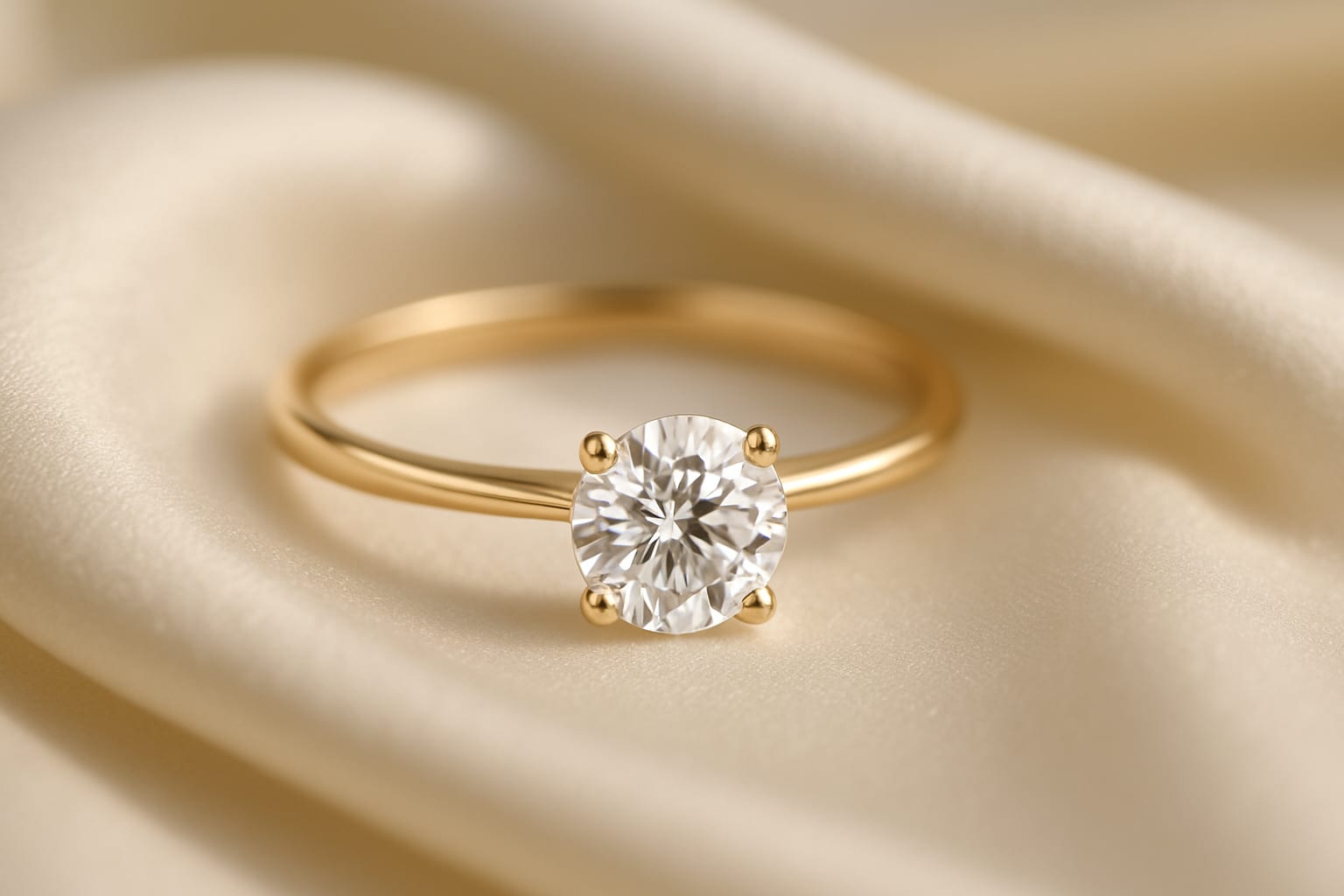
A solitaire ring looks simple, which is exactly why the details matter. With one stone doing all the work, the quality of that stone, the way it is set and the honesty of the price are everything. If you are shopping for a solitaire ring in Delhi, here is how we explain it to customers at our Karol Bagh showroom, in plain language and without jargon.
The 4Cs in plain language
Every diamond is described by four factors, commonly called the 4Cs. A grading laboratory report records all four.
- Carat is weight, not size. One carat is 0.2 grams. Two stones of the same carat can look slightly different in size depending on how they are cut.
- Colour is how white the diamond is, graded on a letter scale from D (colourless) downwards. Differences between neighbouring grades are very subtle and are hard to see once the stone is set in a ring.
- Clarity describes tiny natural marks inside or on the stone. Many grades are "eye-clean", meaning you cannot see the marks without magnification.
- Cut is how well the stone is proportioned and polished, and it governs how much the diamond sparkles. Of the four, cut has the greatest effect on how lively a diamond looks.
A sensible approach is to prioritise cut first, then decide how you want to balance carat, colour and clarity within your budget. There is no single correct combination. Our article on the price of a 1 carat solitaire ring in India walks through how these factors shape what you pay.
Choosing a shape
Round brilliant is the classic and is cut to maximise sparkle. Fancy shapes such as oval, pear, emerald, princess, cushion and marquise have their own character. Elongated shapes such as oval and pear can look larger on the finger for the same carat weight, while emerald cuts show clarity more openly, so the clarity grade matters more there. Try on shapes in person if you can, because a shape you love in a photograph can feel different on your hand.
Choosing a setting
The setting holds the diamond and shapes the look of the ring. Think about how you will wear it.
- Prong settings lift the stone so light enters from many sides. Check that the prongs feel secure and are not sharp.
- Bezel settings surround the stone with metal. They protect the edges and suit active hands.
- Cathedral or raised settings add height and a sense of drama.
- Gold colour and purity change the look and the price. 18 karat is a common choice for diamond rings, and yellow, white and rose gold each flatter stones differently.
Natural or lab-grown
Natural diamonds formed in the earth over a very long time. Lab-grown diamonds are made in controlled conditions and are chemically and physically diamond. The difference is origin, and it affects price, resale perception and how you feel about the purchase. Neither is better in every case. Both should come with a grading report and be clearly described as what they are. We have written a full comparison in our lab-grown diamond jewellery guide, and we offer both in our configurable solitaire range.
Certification
For a centre stone, ask for a grading report from a recognised laboratory and make sure the report number matches the stone. Different laboratories have different reputations and grading styles, which we explain in our guide to GIA, IGI and HRD reports. The certificate describes the diamond only. The gold in a ring should separately carry a BIS hallmark with a HUID.
How the price breakup works at Sun Sea
We sell complete finished jewellery rather than a loose diamond billed separately from a gold setting. When you configure a ring on our solitaire jewellery page, the price is built from the following lines.
- Gold weight and purity
- Gold value
- Diamond value, with carat and shape
- Side diamonds, if the design has any
- Making charges
- A flat 3% GST on the whole total
This means you can change one choice, such as shape or carat, and see which line moves. It also gives you something concrete to hold against any other quote you have collected. Because gold rates move, you can check the day's reference on our rates page.
Ring size basics
A beautiful ring that does not fit is a frustration. Measure a ring you already wear on the same finger, or measure the finger itself with a thread or paper strip, and compare it to a size chart. Fingers swell a little in warm weather and after exercise, so measure at the end of the day when the finger is at its largest. Our ring size guide with country conversion covers methods and charts. Ask about resizing options for your chosen design before you buy, since some settings are easier to adjust than others.
Why seeing the stone matters
Online tools are good for learning and comparing. A diamond, however, has to be seen. Light in a shop, daylight at a window and evening light all show a stone differently. Looking at several stones side by side shows you what a colour or clarity grade means to your own eyes, which is more useful than any description. It also helps to look at your shortlist in more than one setting.
Visiting us in Karol Bagh
Our showroom is at 2659 Gurudwara Rd, Block 46, Beadonpura, Karol Bagh, New Delhi 110005. We are open Tuesday to Sunday, 11:30 am to 7:30 pm, and closed on Mondays. Karol Bagh station on the Blue Line is the nearest metro, and free street parking and on-site parking are available. We take credit and debit cards and Google Pay.
You can call +91 88608 66000 if you would like to check before you come, and our visit page has the details. If you are choosing a ring for an engagement or wedding, our bridal team can also talk through a custom design with you. Come with questions. That is what the visit is for.
Quick FAQ
Which of the 4Cs matters most for a solitaire ring?
Cut has the greatest effect on sparkle, so many buyers prioritise it first. After that it is a balance. Colour and clarity differences between neighbouring grades are subtle, so you can often choose a grade that looks excellent to the eye without paying for the very top of the scale.
Is a lab-grown solitaire a real diamond?
Yes, a lab-grown diamond has the same chemical composition and crystal structure as a natural diamond. The difference is how it was formed, and it should always be disclosed and documented clearly on the report and invoice.
Does the diamond certificate cover the whole ring?
No. The grading report describes the diamond only. The gold should have its own BIS hallmark with purity marking and HUID, and the invoice should list the weight and purity of the gold.
Can I see the price breakup before visiting the showroom?
Yes. The configurator on our solitaire jewellery page shows gold, diamond, making charges and GST as separate lines. You can then visit to see stones in person and confirm the final details.