Lab-Grown Diamond Jewellery in Delhi: An Honest Guide
Sun Sea Jewellers, Karol Bagh, New Delhi · 20 October 2026
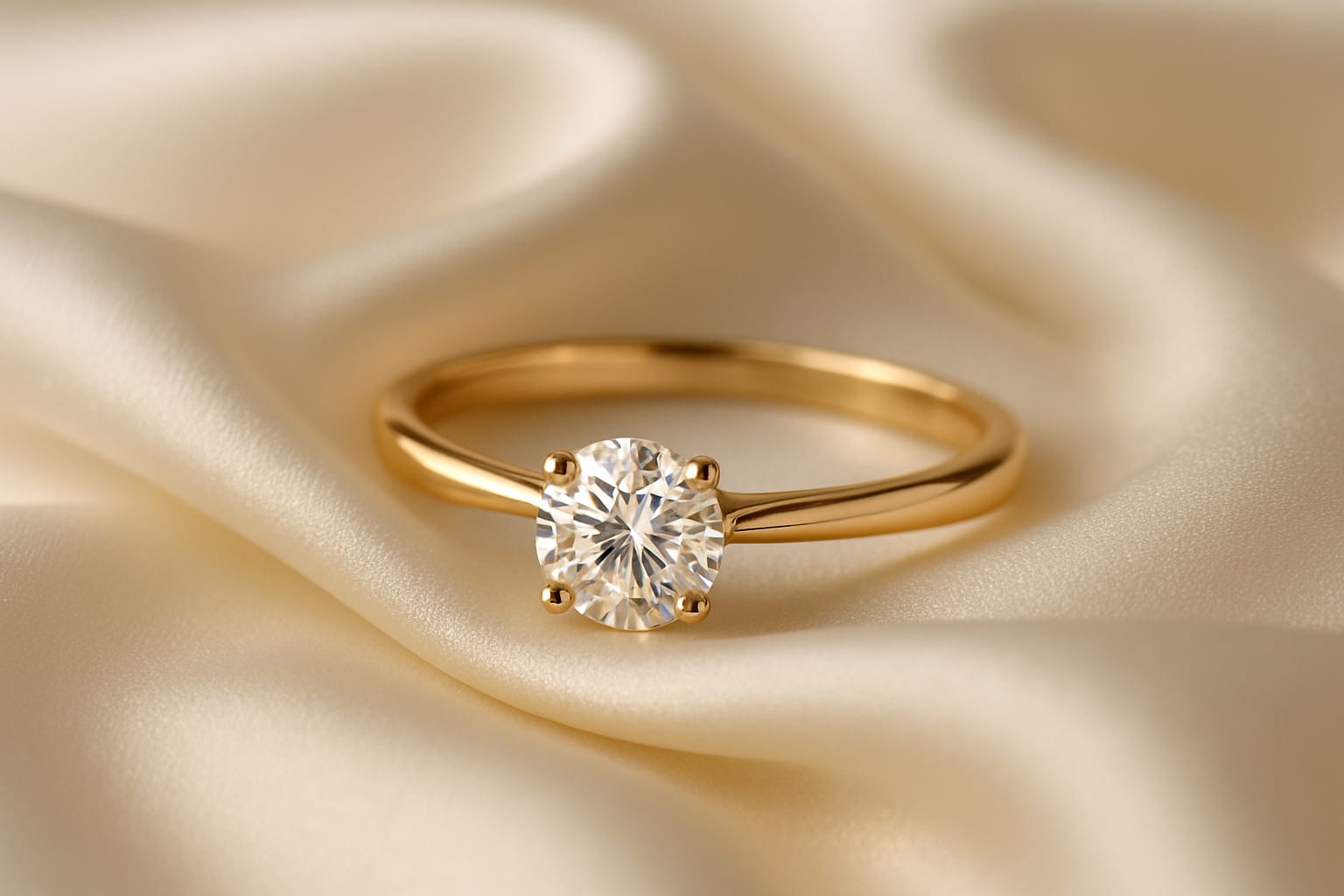
Lab-grown diamonds have gone from a curiosity to a serious option for many buyers, and we get asked about them almost every week at our Karol Bagh showroom. If you are searching for a lab grown diamond in Delhi, you will find a lot of strong claims in both directions. This guide is our attempt to explain what they are, what is genuinely different, and what to ask before buying, without pushing you towards either choice.
What a lab-grown diamond actually is
A lab-grown diamond is a real diamond. It has the same chemical makeup, the same crystal structure and the same physical properties as a natural diamond. The difference is origin: a natural diamond formed over a very long time deep within the earth, while a lab-grown diamond is created in a controlled setting that reproduces the conditions needed for carbon to crystallise.
That is different from a diamond simulant such as cubic zirconia or moissanite, which look similar but are a different material. A lab-grown diamond is not a simulant. It is the same material, grown by a different route.
How it differs from a natural diamond
To the naked eye, a well-cut lab-grown diamond and a natural one look the same. The differences are about origin, rarity and how the stone is valued, not about everyday appearance.
- Origin: natural stones form in the earth, lab-grown stones are made in a controlled process.
- Rarity: natural diamonds are finite, which is a large part of why they have traditionally held value. Lab-grown stones can be produced on demand.
- Identification: gemmological laboratories use specialised equipment to tell the two apart, which is why reputable stones come with a certificate that states the origin.
- Price: lab-grown stones are generally priced lower than natural stones of similar size and quality.
We cover this in more depth in our guide to natural versus lab-grown solitaires.
Certification: always ask for it
A diamond's four Cs, carat, cut, colour and clarity, are what determine its quality, and an independent laboratory report is how you verify them. For both natural and lab-grown stones, ask for a certificate from a recognised gemmological laboratory and check that the report number matches the stone. Lab-grown diamonds are normally reported as lab-grown on the certificate, and you should expect that to be stated clearly.
Different laboratories have different reputations and grading styles. If you want to understand how to read them, our comparison of GIA, IGI and HRD certification walks through the differences. Never buy a stone, natural or lab-grown, where the seller cannot show you a report.
How pricing is shown at Sun Sea
We sell complete finished jewellery. We do not sell a loose diamond on one bill and a gold setting on another. That matters, because a diamond price on its own never tells you what the finished ring costs.
For every piece, natural or lab-grown, the price is broken down into:
- Gold weight and purity
- Gold value
- Diamond value, with carat and shape
- Side diamonds, if the design has any
- Making charges
- A flat 3% GST on the whole total
Because the breakup is in the same format, you can configure the same design with a natural and a lab-grown centre stone and see exactly where the difference comes from. You can do this on our solitaire jewellery page, and since gold is part of every piece, you can also keep an eye on the daily rates.
Resale and value: an honest answer
We will not promise you that any diamond will hold or grow in value, and you should be careful with anyone who does. What we can say in general terms is this: lab-grown diamonds generally resell for less than natural diamonds.
There are a few reasons. Natural diamonds are limited in supply and are valued partly for their rarity, while lab-grown diamonds can be produced in larger numbers, and the cost of producing them has tended to come down as the technology matures. A buyer in the second-hand market therefore usually has a lot of alternatives to choose from, which pulls resale prices down. The gold in a piece is a separate matter, and its value follows the gold rate.
So if your main reason to buy diamonds is to hold them as a store of value, a lab-grown stone is probably not the right fit, and even with a natural stone you should not assume you will get back what you paid. If your reason is to wear and enjoy a beautiful piece, lab-grown can let you choose a larger or higher quality stone for the same spend. Both are legitimate reasons. We just want you to know which one you are choosing.
Who lab-grown diamond jewellery suits
- Buyers who want a larger or cleaner stone within a set budget and care about how it looks and feels to wear
- People who prefer a stone created in a lab, rather than one that has been mined
- Fashion and everyday-wear jewellery, such as earrings, pendants and tennis-style pieces, that you will wear often
- Gifting for younger buyers who want a real diamond without a very high price
Natural diamonds may suit you better if rarity and tradition matter to you, if the piece is meant to be an heirloom, or if you want the stone's natural origin to be part of its story. If it is for a wedding, you may also like our solitaire ring buying guide for Delhi, which covers cut, carat and settings for both.
Caring for lab-grown diamond jewellery
Because lab-grown diamonds are real diamonds, they are just as hard and durable as natural ones, and care is the same for both. The gold setting is usually the part that needs more attention than the stone.
- Clean with warm water, a drop of mild soap and a soft brush, then dry with a soft cloth.
- Take rings off before heavy work, workouts, swimming and cleaning with harsh chemicals.
- Store pieces separately so that diamonds and harder settings do not scratch softer gold.
- Have prongs and clasps checked from time to time, especially on pieces you wear daily.
Seeing both in person in Karol Bagh
Photographs and screens flatten diamonds. The best way to compare is to look at natural and lab-grown stones in the same light, side by side, and ask questions. You can do that at our showroom at 2659 Gurudwara Rd, Block 46, Beadonpura, Karol Bagh, New Delhi 110005. We are open Tuesday to Sunday, 11:30 am to 7:30 pm and closed on Mondays. Karol Bagh Metro station on the Blue Line is the nearest metro, and there is free street parking and on-site parking, according to our Google listing. We accept credit and debit cards and Google Pay, and you can call +91 88608 66000 to check availability first.
If you are also comparing shops around the area, our guide on choosing diamond jewellers in Karol Bagh lists the questions worth asking everywhere, and our visit page has directions.
Quick FAQ
Is a lab-grown diamond a real diamond?
Yes. It has the same chemical composition and crystal structure as a natural diamond. The difference is that it was created in a controlled process instead of forming in the earth.
Will a lab-grown diamond hold its resale value?
We cannot promise resale value for any diamond. In general, lab-grown diamonds resell for less than natural ones, so they are better chosen for wearing and enjoyment than as an investment.
Do lab-grown diamonds come with a certificate?
They should. Ask for a report from a recognised laboratory, check that it matches the stone, and make sure it clearly states that the diamond is lab-grown.
Can I compare natural and lab-grown versions of the same design?
Yes. Our configurator shows the full price breakup for each option, and you can also see both stones in person at our Karol Bagh showroom.